
Feeni with Jaggery Recipe is one of those traditional Indian sweets that brings back the warmth of home, family, and winter mornings. This simple dish is made by combining crispy, thin wheat strands called Feeni with melted jaggery (gud) and sometimes warm milk. It’s a famous winter dessert in many
North Indian homes, especially in Punjab and Rajasthan, where it’s enjoyed during cold mornings or festive occasions like Karva Chauth, Diwali, and weddings.
Feeni is light, flaky, and fried almost like very fine seviyan (vermicelli). When mixed with hot jaggery syrup or soaked in warm milk with ghee, it melts in your mouth and gives a comforting, sweet taste. The jaggery not only adds natural sweetness but also helps keep the body warm in winter, making it both tasty and healthy.
The best part? You don’t need to be a chef to make this. With just 2–3 basic ingredients and 10–15 minutes, you can prepare this heartwarming dessert at home. It’s also a great way to introduce children and guests to the flavors of old-school Indian sweets.
In this post, we’ll walk you through the Feeni with Jaggery recipe, share tips to make it perfectly, and tell you how to enjoy it just like our grandmothers did.
Why Feeni with Jaggery Recipe is Perfect for Winter
Feeni with Jaggery is not just a sweet dish it’s comfort food for the winter season. In cold weather, our body needs warmth, energy, and something that feels satisfying. This recipe gives you all three. Feeni, which is crispy and light, becomes soft and rich when mixed with warm jaggery syrup or hot milk. It feels like a hug in a bowl!
Jaggery (Gud) is a natural sweetener that is known to keep the body warm. It also helps with digestion and gives quick energy something we all need during cold mornings. Adding a little ghee or dry fruits makes it even more nutritious and filling.
In many Indian homes, especially in Punjab, Rajasthan, and Uttar Pradesh, Feeni with jaggery is a traditional winter treat. It’s often made for breakfast or as an evening snack with chai. Elders believe it strengthens the body, especially for kids and older people during the winter months.
Simple to make, easy to digest, and full of warmth that’s why this dish is perfect for winter. It’s not just food, it’s a feeling of home.
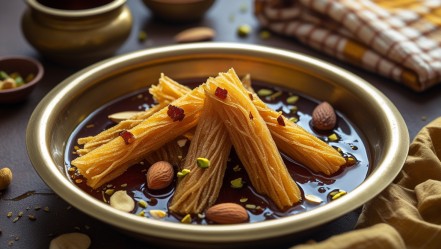
Ingredients For Feeni with Jaggery
You only need a few basic ingredients to make this warm and comforting winter dessert. Here’s what you’ll need
- Feeni (Pheni) – 2 to 3 pieces
You can buy readymade feeni from any Indian sweet shop or store. - Jaggery (Gud) – ½ cup (grated or chopped)
Use organic jaggery for better taste and health benefits. - Water – ½ cup (for melting jaggery)
- Ghee – 1 to 2 teaspoons
Optional, but adds richness and aroma. - Chopped dry fruits – almonds, cashews, pistachios
- Cardamom powder – ¼ teaspoon (for extra flavor)
- Warm milk – ½ cup (if you like it soft and creamy)
How to Make Feeni with Jaggery – Step-by-Step Guide
Making Feeni with Jaggery is simple and quick perfect for winter mornings when you want something warm, sweet, and satisfying. Just follow these easy steps
Step 1: Gather Your Ingredients
Make sure you have all your ingredients ready: feeni (store-bought or homemade), jaggery, water, ghee, and optional dry fruits.
Step 2: Prepare the Jaggery Syrup
- Take ½ cup jaggery and ½ cup water in a pan.
- Heat on a medium flame, stirring occasionally.
- Once the jaggery melts completely and the syrup turns slightly thick, turn off the flame.
- Optional: Strain the syrup to remove any impurities.
Step 3: Heat the Feeni
- In another pan, add 1–2 tsp ghee and lightly warm the feeni for 1–2 minutes.
- Be careful not to burn or over-fry — just warm enough to release the aroma.
Step 4: Combine Feeni and Syrup
- Place the warm feeni in a serving bowl or plate.
- Pour the hot jaggery syrup evenly over it.
- Let it soak for a minute — the feeni will absorb the sweetness and soften slightly.
Step 5: Add Final Touches
- Garnish with chopped dry fruits and a pinch of cardamom powder.
- For a richer version, you can pour warm milk over it instead of syrup, or use both
Traditional Ways to Serve Feeni with Jaggery
Feeni with jaggery is a timeless winter treat that has been enjoyed for generations in North Indian homes. There’s no one “right” way to serve it but here are a few traditional methods that bring out its best flavor and warmth
1. Feeni with Hot Jaggery Syrup
This is the most common way. The feeni is lightly warmed in ghee, then topped with freshly made hot jaggery syrup.
- Let it soak for a minute so it becomes soft and rich.
- Garnish with dry fruits like almonds, cashews, and pistachios.
2. Feeni Soaked in Warm Milk
In many Punjabi households, feeni is broken into a bowl and soaked in hot milk. Jaggery is added on top and stirred until it melts.
- This version is softer and feels like a dessert porridge.
- Perfect for breakfast or bedtime in winters.
3. Feeni Crushed with Ghee and Gud
Some elders prefer a quick mix of crushed feeni, jaggery powder, and a spoon of desi ghee.
- Served without milk, it’s dry and chewy.
- Great for kids and elderly during cold days.
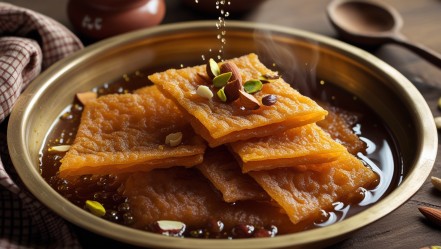
Health Benefits of Feeni with Jaggery in Winter
Feeni with jaggery is not only a delicious and comforting winter dessert but also packed with several health benefits that make it a perfect choice during the colder months. Combining simple ingredients like feeni, jaggery, ghee, and sometimes milk, this traditional sweet provides warmth, energy, and nourishment for the body.
Natural Source of Energy
Jaggery is a rich source of natural sugars, which provide instant energy to the body. Unlike refined sugar, jaggery contains essential minerals like iron, magnesium, and potassium, which help improve blood circulation and keep you energized throughout the day. During winters, when the body needs more energy to keep warm, consuming feeni with jaggery gives a quick boost.
Supports Digestion
Jaggery is known for its digestive properties. It stimulates digestive enzymes and helps in proper digestion, reducing issues like constipation, which is common in winter due to decreased water intake. Additionally, feeni made from wheat or refined flour provides some fiber, aiding smooth digestion.
- Tip: Adding a pinch of cardamom powder enhances digestion and adds flavor.
Keeps the Body Warm
One of the main reasons feeni with jaggery is preferred in winter is because jaggery has warming properties. It helps maintain body temperature and keeps the cold at bay. Combined with ghee, which is also a natural warming agent, this dessert helps protect against cold-related illnesses.
Rich in Nutrients
When served with milk and topped with dry fruits like almonds and pistachios, feeni with jaggery becomes a nutrient-rich treat. Milk adds calcium and protein, while dry fruits provide healthy fats, vitamins, and minerals that support immunity — essential during the winter season.
- Bonus: This combination makes feeni a wholesome snack suitable for all ages, especially children and elders.
Gentle on the Stomach
Unlike many heavy desserts, feeni with jaggery is light and easy to digest, making it ideal for people with sensitive stomachs or those recovering from illness.
Feeni vs. Sewaiyan – What’s the Difference?
At first glance, Feeni and Sewaiyan (Vermicelli) may look similar — both are thin, string-like ingredients used in Indian sweets. But they are quite different in terms of preparation, texture, taste, and traditional use.
Feeni is a traditional North Indian sweet made from fine strands of flour (usually maida or wheat), which are deep-fried in ghee or oil. It is then used in recipes by soaking in jaggery syrup, milk, or served dry with ghee.
Feeni has a crispy, flaky texture and is often used in winter desserts. It’s considered a festive or seasonal sweet, commonly eaten during Karva Chauth, Diwali, or cold months for warmth.
On the other hand, Sewaiyan (vermicelli) are dry-roasted or raw wheat noodles, used in dishes like sheer khurma, kheer, or seviyan pulao. They are boiled in milk or water, not fried, and have a softer texture when cooked. Sewaiyan are popular for Eid, Raksha Bandhan, and other celebrations, and are quicker and more versatile in cooking.
| Feature | Feeni | Sewaiyan (Vermicelli) |
|---|---|---|
| Texture | Crispy, flaky | Soft when cooked |
| Preparation | Deep-fried in ghee/oil | Dry-roasted or raw (uncooked) |
| Common Use | Eaten with jaggery or milk | Used in kheer, sheer khurma, pulao |
| Festivals | Karva Chauth, Diwali, Winters | Eid, Raksha Bandhan, general sweets |
| Shelf Life | Longer (due to frying) | Medium (must be stored dry) |
| Taste | Rich, buttery, traditional | Mild, milk-absorbing, flexible |
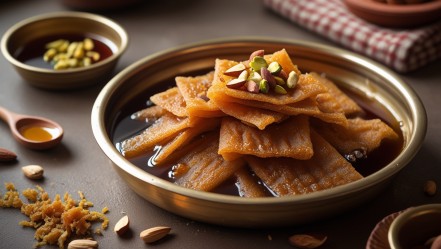
Conclusion
Feeni with Jaggery is more than just a sweet dish it’s a nostalgic reminder of winter mornings, family traditions, and the warmth of homemade comfort food. With just a few ingredients like crispy feeni, jaggery, and a little ghee or milk, you can create a dessert that not only satisfies your sweet cravings but also supports your body during the cold season.
This recipe has been passed down through generations in Punjabi and North Indian homes, loved for its simplicity and nourishing qualities. Whether served dry with jaggery syrup or soaked in warm milk, Feeni with Jaggery brings back the flavors of childhood and the richness of traditional Indian cooking.
So this winter, skip the store-bought desserts and treat yourself to this age-old delicacy quick to make, wholesome to eat, and full of love in every bite.
FAQs
What is Feeni made of
Feeni is made from fine strands of wheat flour, deep-fried in ghee or oil.
Is jaggery better than sugar in this recipe
Yes, jaggery is healthier and gives natural warmth and sweetness.
Can I eat Feeni with milk
Absolutely, Warm milk makes it softer and even more delicious.
Is Feeni with Jaggery good for winter
Yes, it helps keep the body warm and gives quick energy in cold weather.
Where can I buy Feeni
Feeni is available at Indian sweet shops, especially during festivals or winter.